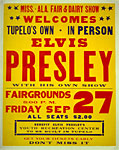
The earliest rock posters were no different than the big band and country music posters that came before them. They were "boxing" style posters, incorporating simple block lettering with unadorned photographs of the performers.Although a few early R&B posters added brightly colored backgrounds and some occasional background art, the rock poster would remain largely unchanged from its inception until late 1965.
Between 1966 and 1971, over 450 posters were printed to advertise rock concerts promoted in San Francisco by Bill Graham and by The Family Dog alone. (In The Family Dog series there were 160 numbered posters (including 16 concerts produced in Denver, Colorado) and in the Bill Graham Series there were 289 numbered posters.) These dance-concerts initially were local events showcasing local talent but as their popularity increased, they featured performances by many of the most famous rock acts of the time.
These events were more than conventional concerts. They were social gatherings which took place in a total environment of music, dance and light. They were the precursors of the "happenings" of the 1960's art scene and they were the epitome of hippie culture.
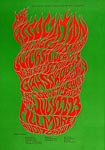
As for the posters themselves, they were of extreme artistic importance. They were daring and highly experimental in their use of color and in their use of lettering which was considered illegible to all but the initiated. They were the first commercial art form to totally subjugate the advertising content of the poster to the overall focus of the artist's statement. This had an irrepressible effect on the future of advertising in general and the poster in particular. Their role was to change forever the concept of what a poster could and couldn't be.
As these posters began to flourish in the San Francisco Area, the new art form which they had created quickly spread to the major metropolitan areas of the United States and England. The art form thrived and influenced artists the world over.
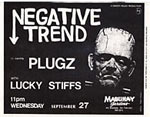
After the closing of the Fillmore West in 1971, Bill Graham and others continued to sporadically issue posters but they had become an afterthought created mostly as commemorative pieces to satisfy the appetite of marketing managers and the burgeoning rock merchandising machine. As Disco and Stadium Rock took over the mainstream, a new counterculture began to emerge. Rejecting the smooth, finished look and style of their contemporaries, Punk artists embraced the grittiness and immediacy of the xerox machine and pumped out 8 1/2 by 11 inch black and white flyers. New Wave posters added color and a different graphic look and feel but largely stayed with the flyer-sized format.
By now rock posters had become an accepted collectible with thousands of serious collectors and part-time afficcianados pursuing these objects of their affection. With a false sense of complacency, they believed that completion of their collections was within arm's reach. The late 80's would prove that to be a dangerous assumption.
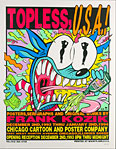
Fueled by a curious mix of psychedelia, pop culture and punk-rock ethos, the roots of the silkscreen movement were laid down in Texas. A thriving local flier and poster scene had borrowed from all that had come before it and was beginning to create something new and vibrant. Throw into the mix fortuitous access to a local screenprinter and a new era for the rock poster was officially born. The realization that a screen, a squegee and a few cans of ink allowed an enterprising artist to create top quality posters in small runs, instantly leveled the playing field and created an entire generation of artist/entrepenuers.

About this same time in San Francisco, Bill Graham realized that changes in the rock music industry had brought things full circle and that the time was ripe for a return to small intimate venues. With this return to his roots, Graham decided to re-establish his time honored tradition of advertising rock concerts with posters. That this tradition still continues over 1,000 posters later and despite Graham's untimely passing, is a lasting tribute to his impact on the world of rock poster collecting.
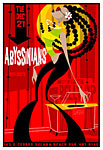
Today, we stand at yet another crossroads. The digital revolution has added a new set of tools to the poster makers arsenal. Never before has it been so easy for so many to create posters...yet few have become masters of the new tools. Fewer still have been able to find true creative outlet through them. Those who have, inspire us and, as in any era, grace us with the beauty of their creations, illuminating the way to a brave new world of poster collecting.
© 1999-2008 Dennis King / RockPosterCollector.com © All Rights Reserved
© Dennis King / D. King Gallery All Rights Reserved